
Status w CKE
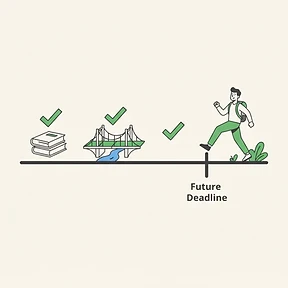
Future Perfect znajduje się w zakresie matury rozszerzonej. CKE podaje między innymi: I hope they will have arrived by the evening oraz By the time I retire, I hope I will have done many exciting things. Oba przykłady pokazują podstawową funkcję: czynność będzie ukończona przed określonym przyszłym punktem.
Budowa Future Perfect
Schemat:
will + have + past participle (III forma)
I will have finished.
She will have arrived.
They will have completed the project.
Po have używamy III formy:
will have gone · seen · written · done · taken
Nie:
❌ will have went / saw / wrote
Przeczenie
will not / won't + have + past participle
I won't have finished by six.
She won't have arrived by then.
They won't have completed the project by Friday.
Pytania
Will + subject + have + past participle?
Will you have finished by Friday?
Will they have arrived by then?
How many chapters will you have read by tomorrow?
Ukończenie przed przyszłym momentem
By six, I'll have finished work.
By Friday, we'll have completed the project.
By the end of the year, she will have saved enough money.
Future Perfect patrzy z przyszłego punktu wstecz: do tego momentu rezultat będzie już gotowy.
Liczba ukończonych czynności
By the end of the month, I'll have read four books.
By Friday, she will have written ten reports.
By the time the course ends, we'll have completed twelve modules.
Czas naturalnie łączy się z konkretnym rezultatem lub liczbą ukończonych czynności.
By i by the time
By
By oznacza „najpóźniej do danego momentu”:
I'll have finished by six.
Nie znaczy to, że skończę dokładnie o szóstej - mogę skończyć wcześniej.
By then, I'll have made a decision.
By tomorrow, she will have sent the email.
By next year, they will have built the school.
By the time
By the time you arrive, I'll have finished dinner.
By the time the lesson starts, we'll have checked everything.
By the time I retire, I hope I will have visited many countries.
Po by the time w zdaniu dotyczącym przyszłości stosujemy formę teraźniejszą:
✅ By the time you arrive, I will have finished.
❌ By the time you will arrive...
By czy until?
I'll have finished by six. - skończę najpóźniej do szóstej
I'll work until six. - będę pracować aż do szóstej
By = deadline / rezultat do danego momentu.
Until = sytuacja trwa do danego momentu.
To jedno z najważniejszych rozróżnień w tym temacie.
Sklep MaturaAngielski.org
Chcesz przygotować się jeszcze szybciej?
Sprawdź gotowe materiały do matury z angielskiego: zestawy zadań, scenariusze, ćwiczenia i materiały do pobrania.

Kontrasty czasów
Future Simple
I will finish the report tomorrow. - przyszłe wydarzenie
By tomorrow, I will have finished the report. - jutro rezultat będzie już gotowy
She will arrive at eight. - moment przyjazdu
By eight, she will have arrived. - najpóźniej do ósmej będzie na miejscu
Future Continuous
At five, I'll be working. - o piątej praca będzie w toku
By five, I'll have finished. - do piątej praca będzie zakończona
Pomocne pytania:
At five: co będzie wtedy w toku?
By five: co będzie już wtedy zrobione?
Present Perfect
I've finished the report. - rezultat do teraz
By tomorrow, I'll have finished the report. - rezultat do przyszłego momentu
Present Perfect ma punkt odniesienia now, Future Perfect punkt w przyszłości.
Future Perfect Continuous
By September, I'll have worked here for ten years.
By September, I'll have been working here for ten years.
W wielu kontekstach obie formy są możliwe, ale Continuous mocniej podkreśla trwanie.
Future Perfect Passive
Na rozszerzeniu warto znać:
will have been + past participle
The bridge will have been completed by next year.
All invitations will have been sent by Friday.
The results will have been published by then.
Will have been done to strona bierna Future Perfect, nie Future Perfect Continuous. Continuous ma formę will have been doing.
Typowe określenia
- by, by then, by tomorrow, by Friday, by next year,
- by the end of...,
- by the time...,
- before + przyszły punkt.
To wskazówki, ale kluczowe pozostaje znaczenie ukończenia przed przyszłym momentem.
Najczęstsze błędy
- ❌ will have finish → ✅ will have finished
- ❌ will have went → ✅ will have gone
- ❌ By the time you will arrive... → ✅ you arrive
- ❌ I will finished by Friday. → ✅ I will have finished
- Przy przyszłym punkcie: ❌ By Friday I have finished. → ✅ I will have finished
- ❌ will have been build → ✅ will have been built
Typowe polskie zdania
Do piątej skończę pracę. → By five, I'll have finished work.
Do jutra przeczytam książkę. → By tomorrow, I'll have read the book.
Zanim przyjedziesz, przygotujemy wszystko. → By the time you arrive, we'll have prepared everything.
Do końca roku zaoszczędzi pieniądze. → By the end of the year, she'll have saved enough money.
Do przyszłego tygodnia dokumenty zostaną wysłane. → By next week, the documents will have been sent.
Do tego czasu podejmiemy decyzję. → By then, we'll have made a decision.
Zadania maturalne
Zadanie 1 - budowa
- By six, I _____ (finish) work.
- By Friday, she _____ (write) the report.
- They _____ not _____ (arrive) by then.
- _____ you _____ (complete) the task by tomorrow?
- How many books _____ you _____ (read) by month-end?
- By next year, we _____ (save) enough money.
Zadanie 2 - by czy until?
- I will work _____ six.
- I will have finished _____ six.
- She will stay here _____ Friday.
- The project will have been completed _____ Friday.
- We won't know _____ tomorrow.
- _____ tomorrow, I will have decided.
Zadanie 3 - Future Continuous czy Future Perfect?
- At five tomorrow, I _____ (work).
- By five tomorrow, I _____ (finish) work.
- At this time next week, we _____ (travel) around Spain.
- By this time next week, we _____ (complete) the first part.
- At eight, Tom _____ (drive) home.
- By eight, Tom _____ (arrive) home.
Zadanie 4 - popraw błąd
- By Friday, I will have finish the project.
- She will have went home by then.
- By the time you will arrive, we will have eaten.
- The bridge will have been build by next year.
- Will you have wrote the report by Monday?
- By tomorrow, I finished everything.
Zadanie 5 - tłumaczenie
- Do szóstej skończę pracę.
- Do jutra przeczytam trzy rozdziały.
- Zanim przyjedziesz, przygotujemy wszystko.
- Do końca miesiąca zaoszczędzi tysiąc złotych.
- Do przyszłego roku nowa szkoła zostanie zbudowana.
- Czy do piątku skończysz projekt?
- Do tego czasu oni już wyjadą.
- Do czasu przejścia na emeryturę będę miał wiele doświadczeń.
Zadanie 6 - transformacje
-
I will finish the report before Friday. BY
I _____ Friday. -
Builders will complete the bridge before next year. BEEN
The bridge _____ next year. -
She will arrive before eight. HAVE
By eight, she _____. -
We will complete ten units before the course ends. TIME
By _____, we will have completed ten units.
Zadanie 7 - Future Simple czy Future Perfect?
- I think she _____ (finish) the report tomorrow.
- By tomorrow, she _____ (finish) the report.
- Tom _____ (arrive) at six according to our prediction.
- By six, Tom _____ (arrive).
- The company _____ (open) an office next year.
- By year-end, the company _____ (open) three offices.
Zadanie 8 - mini-test rozszerzony
By the end of the school year, I 1. _____ (complete) all exams. I hope I 2. _____ also _____ (improve) my English. This time next year, I 3. _____ (study) in a new city, and by then I 4. _____ (move) away from home. My parents think I 5. _____ (become) more independent. By the time my first term 6. _____ (finish), I hope I 7. _____ (make) new friends and 8. _____ (learn) how to manage everything.
Odpowiedzi
Zadanie 1
- will have finished, 2. will have written, 3. won't/have arrived, 4. Will/have completed, 5. will/have read, 6. will have saved.
Zadanie 2
- until, 2. by, 3. until, 4. by, 5. until, 6. By.
Zadanie 3
- will be working, 2. will have finished, 3. will be travelling, 4. will have completed, 5. will be driving, 6. will have arrived.
Zadanie 4
- will have finished.
- will have gone.
- By the time you arrive...
- will have been built.
- Will you have written...?
- By tomorrow, I will have finished everything.
Zadanie 5
- By six, I'll have finished work.
- By tomorrow, I'll have read three chapters.
- By the time you arrive, we'll have prepared everything.
- By month-end, she'll have saved a thousand zlotys.
- By next year, the new school will have been built.
- Will you have finished the project by Friday?
- By then, they will already have left.
- By the time I retire, I hope I will have had many experiences.
Zadanie 6
- will have finished the report by, 2. will have been completed by, 3. will have arrived, 4. the time the course ends.
Zadanie 7
- will finish, 2. will have finished, 3. will arrive, 4. will have arrived, 5. will open, 6. will have opened.
Zadanie 8
- will have completed, 2. will/have improved, 3. will be studying, 4. will have moved, 5. will have become, 6. finishes, 7. will have made, 8. will have learned/learnt.
Szybka ściąga
will have + III forma
By five, I'll have finished. - rezultat gotowy do przyszłego momentu
At five, I'll be working. - czynność w toku w przyszłym momencie
By = najpóźniej do.
Until = sytuacja trwa aż do.
By the time you arrive, I'll have finished.
❌ By the time you will arrive...
Future Perfect Passive: will have been done.
Najważniejsze pytanie: co będzie już zrobione do tego momentu?