
Status w CKE
First Conditional należy do zakresu podstawowego i rozszerzonego. CKE podaje jako przykład: If it rains tomorrow, we will stay at home. Na poziomie podstawowym w wykazie znajdują się conditionals typu 0, I i II, a na rozszerzeniu dodatkowo typ III.
Najważniejsza idea
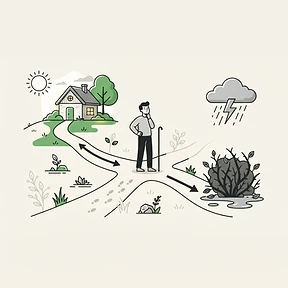
First Conditional opisuje realną lub możliwą sytuację dotyczącą przyszłości i jej prawdopodobny albo możliwy skutek. Warunek nie musi się spełnić - mówimy, co wydarzy się, jeśli się spełni.
If it rains tomorrow, we will stay at home.
If I have time, I will help you.
Budowa
Najważniejszy schemat:
IF + PRESENT SIMPLE, WILL + VERB
If she studies, she will pass the exam.
If we leave now, we will catch the bus.
Po will używamy formy podstawowej: will go, will see, will help - nie will goes ani will to go.
Kolejność części zdania
If it rains, we will stay home.
We will stay home if it rains.
Znaczenie jest zasadniczo takie samo. Gdy zaczynamy od if-clause, oddzielamy ją przecinkiem.
Przeczenia i pytania
If you do not hurry, you will miss the bus.
If Tom comes, I will not tell him anything.
If we do not book now, there will not be any rooms left.
Przeczenie może wystąpić zarówno w warunku, jak i w rezultacie.
What will you do if you miss the bus?
Will you help me if I ask you?
Where will you stay if the hotel is full?
W pytaniu inwersja dotyczy części z will. W if-clause pozostaje zwykły szyk Present Simple.
Po if nie używamy mechanicznie will
W typowym First Conditional po if używamy Present Simple, mimo że po polsku mówimy o przyszłości.
✅ If it rains tomorrow, we will stay home.
❌ If it will rain tomorrow, we will stay home.
Na rozszerzeniu można spotkać will po if, gdy wyraża gotowość, uprzejmą prośbę lub upór: If you will wait here, I will get the manager. To inne znaczenie will, nie zwykłe oznaczenie przyszłości.
Inne formy w rezultacie
W części głównej możemy użyć innych czasowników modalnych lub imperatywu, jeśli wymaga tego sens.
If you finish early, you can go home.
If the weather improves, we may go for a walk.
If Tom calls, tell him I am busy.
If you want to pass, you must practise regularly.
May i might
If the weather improves, we may go out.
If I finish early, I might meet Tom.
May/might pokazują możliwość, a will przedstawia rezultat jako przewidywany.
Can i imperative
If you finish your homework, you can use my laptop.
If you see Kate, tell her to call me.
Unless i inne łączniki
Unless = if ... not.
Unless you hurry, you will miss the bus.
If you do not hurry, you will miss the bus.
Nie używaj podwójnego przeczenia:
❌ Unless you do not hurry, you will miss the bus.
Na rozszerzeniu przydatne są konstrukcje oznaczające "pod warunkiem że":
You can borrow my car as long as you drive carefully.
We will go on the trip provided that the weather is good.
You can stay here providing you keep the room tidy.
If czy when w przyszłości?
If oznacza, że nie wiemy, czy warunek się spełni. When zakłada, że wydarzenie traktujemy jako oczekiwane lub pewne.
If Tom comes, I will talk to him. - nie wiem, czy przyjdzie.
When Tom comes, I will talk to him. - zakładam, że przyjdzie.
Po if i when używamy Present Simple, nie will, jeśli są to zwykłe future clauses.
Sklep MaturaAngielski.org
Chcesz przygotować się jeszcze szybciej?
Sprawdź gotowe materiały do matury z angielskiego: zestawy zadań, scenariusze, ćwiczenia i materiały do pobrania.

Formy rozszerzone po if
Present Continuous
W warunku może pojawić się Present Continuous, jeśli sens dotyczy czynności trwającej lub planu.
If you are staying at home tonight, I will come over.
If Tom is working tomorrow, we will meet on Sunday instead.
Present Perfect
Jeżeli chcemy podkreślić zakończenie czynności przed przyszłym skutkiem, możliwy jest Present Perfect.
If you have finished by six, we can go out.
If she has sent the file, I will check it tonight.
Porównania
First czy Zero Conditional?
If I drink coffee late, I cannot sleep. - regularna zależność, Zero Conditional.
If I drink coffee tonight, I will not sleep. - konkretna przyszła sytuacja, First Conditional.
First czy Second Conditional?
If I have enough money, I will buy the laptop. - realna możliwość.
If I had enough money, I would buy the laptop. - sytuacja hipotetyczna lub mniej realna.
Typowe polskie tłumaczenia
Jeśli będzie padać, zostaniemy w domu.
If it rains, we will stay at home.
Jeśli będę miał czas, zadzwonię.
If I have time, I will call.
Jeśli się nie pospieszysz, spóźnisz się.
If you do not hurry, you will be late.
Jeśli zobaczysz Annę, powiedz jej, żeby do mnie zadzwoniła.
If you see Anna, tell her to call me.
Jeśli pogoda się poprawi, być może pójdziemy na spacer.
If the weather improves, we may go for a walk.
Jeśli nie zarezerwujemy teraz, nie będzie wolnych pokoi.
Unless we book now, there will not be any rooms left.
Najczęstsze błędy
- ❌ If it will rain tomorrow, we will stay home. ✅ If it rains tomorrow, we will stay home.
- ❌ If she will study, she will pass. ✅ If she studies, she will pass.
- ❌ Unless you do not hurry, you will miss the bus. ✅ Unless you hurry, you will miss the bus.
- ❌ If Tom comes, he will can help us. ✅ If Tom comes, he will be able to help us.
- ❌ If I will have time, I call you. ✅ If I have time, I will call you.
- ❌ What you will do if you miss the train? ✅ What will you do if you miss the train?
Zadania maturalne
Zadanie 1 - podstawowa budowa
- If it _____ (rain), we _____ (stay) at home.
- If Tom _____ (call), I _____ (tell) him everything.
- If you _____ (not / hurry), you _____ (miss) the bus.
- What _____ you _____ (do) if you _____ (not / pass) the exam?
- If she _____ (study) regularly, she _____ probably _____ (improve).
- If we _____ (leave) now, we _____ (arrive) before dark.
Zadanie 2 - will, can, may/might czy imperative?
- If you finish early, you _____ go home. (możliwość/pozwolenie)
- If the weather improves, we _____ go to the beach. (możliwość)
- If you see Tom, _____ him to call me. (polecenie)
- If you do not understand, you _____ ask the teacher. (możliwość)
- If she works hard, she _____ probably pass. (przewidywany rezultat)
Zadanie 3 - if czy unless?
- _____ you hurry, you will miss the train.
- _____ it stops raining, we will stay inside. Znaczenie: jeśli nie przestanie padać.
- _____ Tom calls, I will leave without him. Znaczenie: jeśli Tom nie zadzwoni.
- _____ you do not practise, you will not improve.
- _____ we book now, there may not be any rooms left.
Zadanie 4 - popraw błędy
- If it will rain, we will cancel the match.
- Unless you do not leave now, you will be late.
- If Tom will come, I will talk to him.
- What you will do if the shop is closed?
- If I have enough money, I will to buy it.
- If you will see Kate, tell her to call me.
Zadanie 5 - tłumaczenie
- Jeśli jutro będzie ciepło, pójdziemy na plażę.
- Jeśli nie będziesz się uczyć, nie zdasz.
- Jeśli zobaczysz Toma, poproś go, żeby do mnie zadzwonił.
- Jeśli skończę wcześniej, być może przyjdę.
- Jeśli się nie pospieszymy, przegapimy pociąg.
- Co zrobisz, jeśli nie dostaniesz tej pracy?
Zadanie 6 - transformacje
- If you do not hurry, you will miss the bus. UNLESS - _____, you will miss the bus.
- You can borrow my laptop, but only if you are careful. LONG - You can borrow my laptop _____ careful.
- If Tom does not call, we will leave. UNLESS - _____, we will leave.
- Perhaps we will go out if the weather improves. MIGHT - If the weather improves, _____ out.
- Finish your homework and then you can play. IF - _____ your homework, you can play.
Odpowiedzi
Zadanie 1
- rains / will stay, 2. calls / will tell, 3. do not hurry / will miss, 4. will / do / do not pass, 5. studies / will / improve, 6. leave / will arrive.
Zadanie 2
- can, 2. may / might, 3. tell, 4. can, 5. will.
Zadanie 3
- Unless, 2. Unless, 3. Unless, 4. If, 5. Unless.
Zadanie 4
- If it rains, we will cancel the match.
- Unless you leave now, you will be late.
- If Tom comes, I will talk to him.
- What will you do if the shop is closed?
- If I have enough money, I will buy it.
- If you see Kate, tell her to call me.
Zadanie 5
- If it is warm tomorrow, we will go to the beach.
- If you do not study, you will not pass.
- If you see Tom, ask him to call me.
- If I finish early, I may / might come.
- Unless we hurry, we will miss the train.
- What will you do if you do not get the job?
Zadanie 6
- Unless you hurry, 2. as long as you are, 3. Unless Tom calls, 4. we might go, 5. If you finish.
Mini-test rozszerzony
- If you _____ (stay) at home tonight, I will bring the documents to you.
- If she _____ already _____ (finish) the report, we can send it now.
- You can use my car provided that you _____ (drive) carefully.
- If you will wait here, I will speak to the manager. Wyjaśnij, dlaczego will jest możliwe.
- Przekształć z UNLESS: If you do not send the form today, your application will not be considered.
Odpowiedzi
- are staying - warunek dotyczy planu.
- has / finished - zakończenie jest istotne przed skutkiem.
- drive.
- Will wyraża gotowość lub uprzejmą zgodę na poczekanie.
- Unless you send the form today, your application will not be considered.
Szybka ściąga
- First Conditional opisuje realną lub możliwą sytuację w przyszłości.
- Najważniejszy schemat: if + Present Simple, will + verb.
- Po if nie używamy will jako zwykłego znacznika przyszłości.
- W rezultacie możliwe są też can, may, might, must i imperative.
- Unless = if ... not; nie stosuj podwójnego przeczenia.
- If oznacza możliwość, a when wydarzenie oczekiwane lub pewne.
- Na rozszerzeniu zwracaj uwagę na Present Continuous i Present Perfect w if-clause oraz znaczeniowe użycia will.